Smile Makeover Geneva: Aesthetic Dental Care Guide 2026
A smile makeover is not a single procedure -- it is a carefully orchestrated combination of cosmetic and restorative treatments tailored to your unique dental anatomy, facial structure, and personal goals. In Geneva, a city known for precision and excellence, cosmetic dentistry has reached a level that rivals any capital in the world.
This guide covers every procedure involved in a smile makeover, real costs in Swiss Francs, the treatment planning process, and practical advice on choosing the right cosmetic dentist in Geneva. Whether you are considering veneers, ceramic crowns, or a full-mouth rehabilitation, you will find the information you need here.
What Is a Smile Makeover?
A smile makeover is a comprehensive treatment plan that combines multiple cosmetic dental procedures to achieve a harmonious, natural-looking smile. Unlike a single treatment such as whitening or a filling, a makeover addresses the shape, colour, alignment, proportion, and overall symmetry of your teeth in relation to your lips, gums, and facial features.
The concept originated in Hollywood in the 1930s when dentist Charles Pincus created temporary veneers for actors. Today, smile makeovers have evolved into a highly sophisticated discipline backed by digital imaging, CAD/CAM technology, and advanced ceramic materials. In Geneva, practitioners combine this technology with the meticulous Swiss approach to craftsmanship.
A typical smile makeover may include two to six procedures, selected from a menu that includes porcelain veneers, teeth whitening, dental crowns, bridges, implants, gum contouring, composite bonding, and orthodontics (such as Invisalign). The specific combination depends on your starting point and your goals.
Common reasons patients seek a smile makeover:
- Chipped, cracked, or worn teeth from grinding (bruxism) or age
- Discolouration that does not respond to whitening alone
- Missing teeth causing gaps or an uneven bite
- Uneven gum line (gummy smile) or receding gums
- Crooked or crowded teeth without wanting traditional braces
- Old metal fillings or amalgam restorations visible when smiling
- A life event -- wedding, career change, or simply wanting a confidence boost
Dental Aesthetic Care Geneva
Geneva has established itself as a European hub for aesthetic dental care. The city's dental clinics benefit from Switzerland's rigorous medical standards, access to world-class dental laboratories (many located in the German-speaking regions), and a multilingual patient base that includes diplomats, executives, and residents who demand the highest quality.
Aesthetic dental care goes beyond cosmetics. It encompasses the functional harmony of your bite (occlusion), the health of your gum tissue, and the long-term stability of restorations. A responsible aesthetic dentist in Geneva will never sacrifice function for appearance -- the two must work together.
The core procedures that fall under aesthetic dental care include:
| Procedure | Purpose | Duration | Longevity |
|---|---|---|---|
| Porcelain veneers | Reshape, whiten, align front teeth | 2-3 appointments | 10-20 years |
| Teeth whitening | Remove stains, brighten shade | 1-2 sessions | 1-3 years |
| Composite bonding | Repair chips, close small gaps | 1 appointment | 3-7 years |
| Gum contouring | Reshape gum line (laser) | 1 appointment | Permanent |
| Invisalign / clear aligners | Straighten teeth without braces | 6-18 months | Permanent (with retainer) |
| Ceramic crowns | Restore damaged/broken teeth | 2 appointments | 10-15 years |
| Dental implants | Replace missing teeth permanently | 3-6 months | 20+ years |
| Dental bridges | Replace missing teeth (fixed) | 2-3 weeks | 7-15 years |
Porcelain Veneers
Veneers are thin shells of porcelain (typically 0.3-0.7mm thick) bonded to the front surface of teeth. They are the single most transformative procedure in cosmetic dentistry. In Geneva, dentists predominantly use feldspathic porcelain or pressed ceramics (e.max) for veneers, both offering exceptional translucency that mimics natural enamel.
The process requires two visits: the first for preparation and impressions, the second for bonding. Modern "minimal-prep" or "no-prep" veneers (such as Lumineers) require little to no enamel removal, but they are thicker and may not suit every case. Your dentist will advise based on your tooth position and desired outcome.
Cost in Geneva: CHF 800-1,500 per veneer. A full smile (upper 6-10 teeth) typically runs CHF 6,000-15,000. Prices vary based on the ceramist (master technicians charge more), the material, and the complexity of the case.
Teeth Whitening
Professional whitening in Geneva uses either hydrogen peroxide (25-40%) or carbamide peroxide (10-22%) -- far more effective than over-the-counter strips (which contain 3-10% peroxide). In-office treatments take 60-90 minutes and can lighten teeth by 3-8 shades in a single session. Take-home trays with custom-fitted moulds provide a more gradual result over 1-2 weeks.
Cost in Geneva: CHF 300-500 for in-office treatment, CHF 200-350 for take-home kits. Some clinics offer combination packages (one in-office session plus take-home maintenance) for CHF 450-600.
Important note: whitening only works on natural teeth. If you have existing veneers, crowns, or bonding, those restorations will not change colour. This is why whitening is typically done before any restorative work, so the dentist can match new restorations to your whitened shade.
Composite Bonding
Bonding uses tooth-coloured composite resin applied directly to the tooth and sculpted by hand. It is the most affordable and least invasive cosmetic procedure -- ideal for small chips, minor gaps, or reshaping uneven edges. A skilled dentist can transform a tooth in 30-60 minutes without any anaesthesia.
Cost in Geneva: CHF 150-400 per tooth. The trade-off is durability -- composite is softer than porcelain and more susceptible to staining. It typically lasts 3-7 years before needing replacement or polishing.
Gum Contouring
A "gummy smile" -- where excessive gum tissue covers the upper teeth -- can be corrected with laser gum contouring. This painless procedure reshapes the gum line in a single visit, exposing more of the tooth surface and creating a more balanced proportion between teeth and gums. In Geneva, most clinics use diode or erbium lasers, which minimise bleeding and accelerate healing.
Cost in Geneva: CHF 500-1,500 depending on the number of teeth involved. Recovery is minimal -- mild discomfort for 2-3 days, with final results visible within 2 weeks.
Invisalign and Clear Aligners
For patients with mild to moderate misalignment, Invisalign offers a discreet alternative to traditional braces. The treatment uses a series of custom-made, removable clear aligners that gradually shift teeth into position. Each aligner is worn for 1-2 weeks, with total treatment lasting 6-18 months depending on complexity.
Geneva has a high density of Invisalign Diamond and Platinum providers -- dentists who treat 100+ cases per year and have the most experience with complex movements. When choosing a provider, ask for their Invisalign tier (Diamond > Platinum > Gold > Silver).
Cost in Geneva: CHF 4,000-9,000 depending on the number of aligners needed. "Lite" cases (minor corrections, 14 aligners) start at CHF 3,500, while comprehensive cases (40+ aligners) can reach CHF 8,000-9,000.
Cosmetic Dentistry Geneva
Cosmetic dentistry in Geneva operates at the intersection of art and science. The city's dental professionals are trained not only in the technical aspects of restoration but in facial aesthetics, colour theory, and the psychology of the smile. Many Geneva-based cosmetic dentists hold advanced certifications from the European Academy of Esthetic Dentistry (EAED) or the American Academy of Cosmetic Dentistry (AACD).
What distinguishes Geneva's cosmetic dental scene from other European cities is the quality of the dental laboratories. Switzerland has a long tradition of master ceramists -- artisans who hand-layer porcelain to create restorations that are virtually indistinguishable from natural teeth. Laboratories such as those in Zurich and Bern supply Geneva clinics with work that is widely regarded as among the best in the world.
A legitimate cosmetic dentist in Geneva will always start with a comprehensive examination including:
- Full-mouth digital radiographs (panoramic X-ray + periapical images)
- Intraoral scan (3D digital impression of all teeth)
- Facial photographs (frontal, profile, and smile-at-rest)
- Bite analysis (occlusion check, TMJ assessment)
- Periodontal assessment (gum health, probing depths)
Red flag: any dentist who proposes cosmetic work without examining your gum health and bite first is cutting corners. Placing veneers on teeth with untreated periodontal disease is a recipe for failure.
Ceramic Crown Geneva
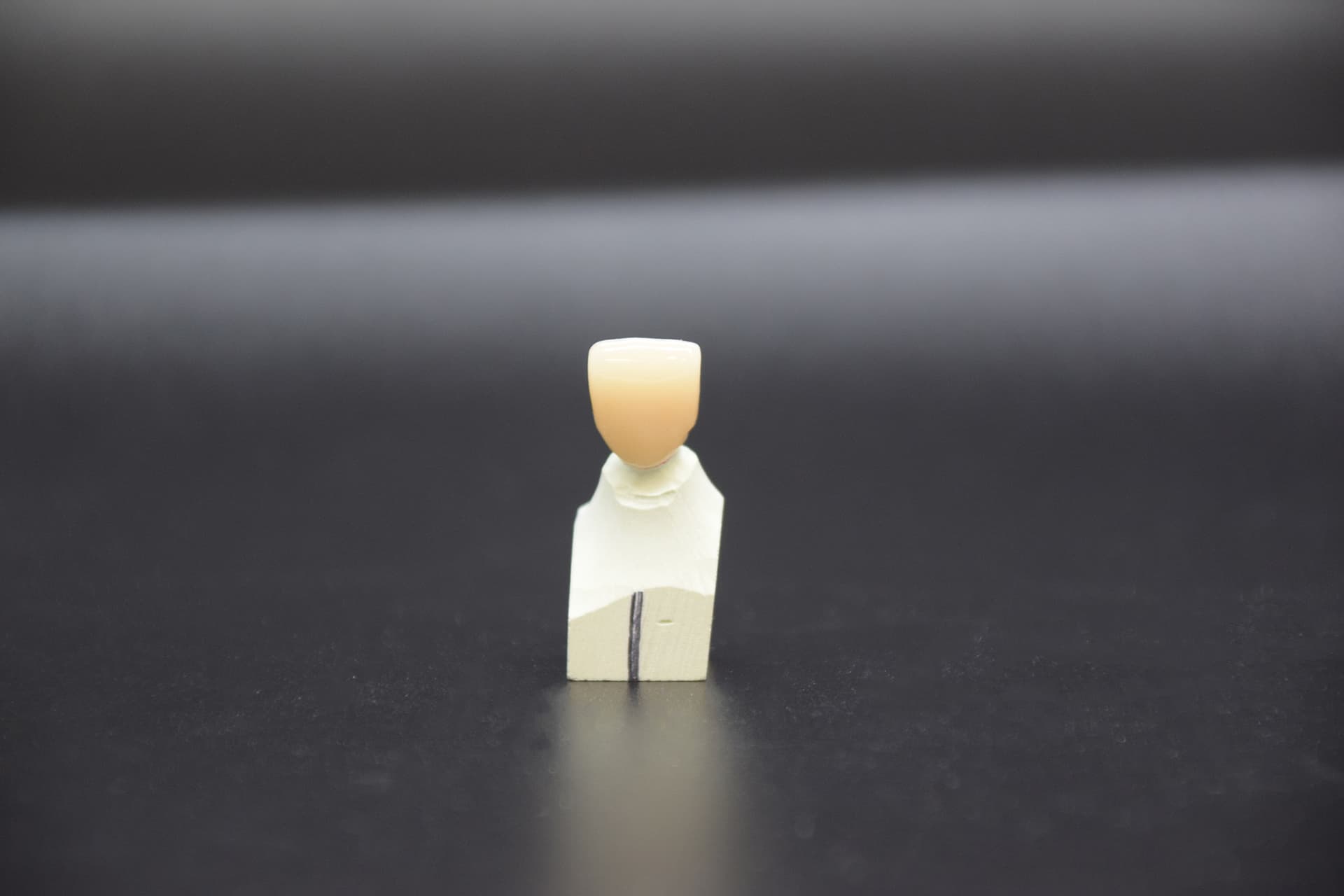
A dental crown is a cap that covers the entire visible portion of a tooth, restoring its shape, strength, and appearance. In Geneva, ceramic crowns have almost entirely replaced older metal-fused-to-porcelain (PFM) crowns. The two dominant materials in 2026 are e.max (lithium disilicate) and zirconia, each with distinct advantages.
e.max Crowns (Lithium Disilicate)
Manufactured by Ivoclar Vivadent (a Liechtenstein company, right next door to Switzerland), e.max is the material of choice for front teeth. Its translucency closely matches natural enamel, allowing light to pass through and reflect just as a natural tooth does. This makes it virtually undetectable, even under close inspection.
E.max has a flexural strength of 360-400 MPa -- strong enough for single crowns and small anterior bridges, but not ideal for large posterior bridges or patients with severe bruxism. It can be either pressed (traditional) or milled using CAD/CAM technology for same-day delivery.
Zirconia Crowns
Zirconia (zirconium dioxide) is the strongest ceramic material available, with flexural strength of 900-1,200 MPa -- nearly three times that of e.max. This makes it the preferred choice for molars, long-span bridges, and patients who grind their teeth. Modern "multi-layered" or "gradient" zirconia (such as Katana UTML or BruxZir Anterior) has dramatically improved in aesthetics, though it still cannot match e.max for front-teeth translucency.
| Property | e.max | Zirconia |
|---|---|---|
| Strength (MPa) | 360-400 | 900-1,200 |
| Best for | Front teeth, single crowns | Molars, bridges, bruxism |
| Aesthetics | Excellent (high translucency) | Good (improving rapidly) |
| Biocompatibility | Excellent | Excellent |
| Cost in Geneva | CHF 900-1,500 | CHF 1,000-2,000 |
| Lifespan | 10-15 years | 15-20+ years |
| Same-day possible? | Yes (CEREC/CAD-CAM) | Yes (limited aesthetics) |
The Crown Procedure: Step by Step
Visit 1 (60-90 minutes): The dentist numbs the area, removes any decay, and reshapes the tooth to create space for the crown (typically 1-2mm of reduction on all sides). A digital impression is taken using an intraoral scanner (replacing the old putty moulds). A temporary crown is placed while the lab fabricates the final restoration.
Visit 2 (30-45 minutes, 7-14 days later): The temporary is removed, the fit and colour of the final crown are checked, and it is permanently bonded using dental cement. Minor adjustments to the bite are made, and the crown is polished.
Some Geneva clinics now offer same-day crowns using CEREC technology -- the tooth is prepared, scanned, and the crown is milled chairside from a block of ceramic, all in a single 2-hour appointment. The convenience is excellent, though hand-layered lab-made crowns still offer superior aesthetics for front teeth.
Dental Bridge vs Implant: Which Is Right for You?
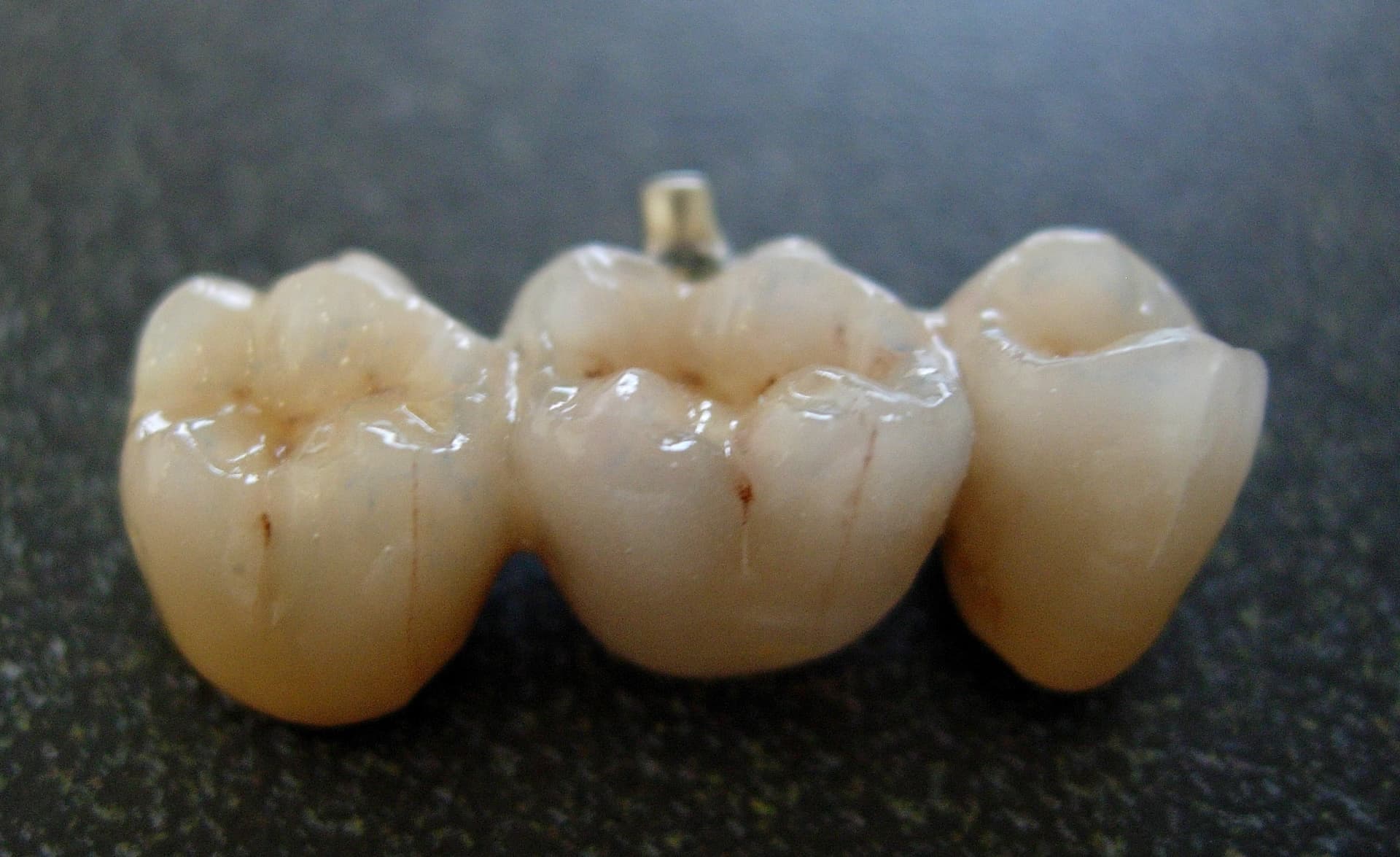
When a tooth is missing, you have two main options to replace it: a dental bridge or a dental implant. Both are effective, but they differ significantly in cost, invasiveness, longevity, and impact on surrounding teeth. In Geneva, implants are increasingly preferred, but bridges remain an excellent option in many situations.
| Factor | Dental Bridge | Dental Implant |
|---|---|---|
| Cost (Geneva) | CHF 2,000-4,000 (3-unit) | CHF 2,500-5,000 (single) |
| Treatment time | 2-3 weeks | 3-6 months |
| Surgery required? | No | Yes (minor) |
| Adjacent teeth affected? | Yes (must file down) | No |
| Bone preservation | No (bone resorbs) | Yes (stimulates bone) |
| Lifespan | 7-15 years | 20+ years (often lifetime) |
| Cleaning difficulty | Moderate (floss threader) | Easy (like natural tooth) |
| Best candidate | Patients who want speed, have healthy adjacent teeth already crowned | Patients with adequate bone, who want the longest-lasting solution |
When a bridge makes more sense: if the teeth on either side of the gap already have large fillings or crowns, a bridge is efficient because those teeth need crowns anyway. Also, patients who cannot undergo surgery (due to medications like blood thinners, uncontrolled diabetes, or radiation to the jaw) may be better candidates for a bridge.
When an implant is the better choice: if the adjacent teeth are healthy and intact, filing them down for a bridge sacrifices sound tooth structure unnecessarily. Implants also prevent bone loss in the jaw -- without a tooth root (or implant) in place, the bone gradually resorbs, which can change the shape of your face over time.
In some cases, bone grafting may be needed before an implant can be placed. This adds CHF 500-2,000 and 3-6 months of healing time. Your dentist will evaluate bone density using a CBCT (cone-beam computed tomography) scan.
Digital Smile Design (DSD)
Digital Smile Design is a revolutionary planning tool that allows you to see your new smile before any treatment begins. Developed by Dr. Christian Coachman, DSD uses facial analysis, video, and 3D modelling to design the ideal smile based on your unique facial proportions, lip dynamics, and tooth-to-face ratios.
The process works as follows:
- Facial analysis: High-resolution photos and videos are taken from multiple angles, including a video of you speaking and smiling naturally.
- Digital design: Using specialised software, the dentist designs the ideal tooth shape, size, colour, and position overlaid on your actual facial photos.
- Mock-up: A physical "trial smile" is created -- a temporary overlay placed on your teeth so you can see and feel the proposed design in your mouth. You can walk around, look in the mirror, even take photos.
- Refinement: Based on your feedback, adjustments are made before any permanent work begins.
- Execution: The final design is sent to the dental laboratory with precise specifications, ensuring the finished result matches what was approved.
DSD is particularly valuable for complex cases involving multiple teeth. It eliminates the guesswork and gives both patient and dentist a clear, shared vision of the end result. In Geneva, DSD planning typically costs CHF 500-1,500 as an additional fee, but many dentists include it in the overall treatment cost for comprehensive makeovers.
Not all clinics offer full DSD. When enquiring, ask specifically whether they use the official DSD software or a similar digital planning system. The key benefit is the trial smile mock-up -- if a clinic cannot provide this, they are using a simplified version.
Treatment Planning Process
A well-planned smile makeover follows a strict sequence. Doing procedures in the wrong order leads to colour mismatches, bite problems, or wasted money. Here is the standard sequence used by Geneva's top cosmetic dentists:
Phase 1: Foundation (1-4 weeks)
Comprehensive examination, X-rays, intraoral scans, DSD session. Any underlying issues are identified: gum disease, cavities, root infections. These must be treated FIRST before any cosmetic work.
Phase 2: Orthodontics (if needed, 6-18 months)
If teeth need repositioning, Invisalign or aligners are started. This reduces the amount of enamel that needs to be removed for veneers and creates a better foundation.
Phase 3: Surgical (if needed, 3-6 months)
Implant placement, bone grafting, gum surgery. These require healing time before restorative work can begin.
Phase 4: Whitening (2-4 weeks before restorations)
Whiten all natural teeth to the desired shade. Wait 2 weeks for the colour to stabilise before shade-matching restorations.
Phase 5: Restorations (2-4 weeks)
Veneers, crowns, bridges, and bonding are placed. The dental lab matches the colour to your newly whitened teeth. Temporary restorations are worn while the final ones are fabricated.
Phase 6: Final Adjustments (1-2 weeks)
Bite refinement, polishing, and final photographs. Minor adjustments are common and expected. You should feel comfortable biting and chewing without any high spots.
Total timeline: simple cases (whitening + 4-6 veneers) can be completed in 4-6 weeks. Complex cases (orthodontics + implants + full-mouth veneers) may take 12-18 months. Your dentist will provide a detailed timeline at the consultation.
Smile Makeover Costs in CHF (Geneva 2026)
Switzerland is one of the most expensive countries for dental care, but Geneva prices reflect the quality of materials, laboratory work, and professional expertise. Here is a realistic breakdown of what each procedure costs in Geneva in 2026:
| Procedure | Price Range (CHF) | Notes |
|---|---|---|
| Consultation + DSD | 150-500 | Often deducted from treatment cost |
| Professional whitening (in-office) | 300-500 | Single session, 3-8 shades lighter |
| Composite bonding (per tooth) | 150-400 | Lasts 3-7 years |
| Porcelain veneer (per tooth) | 800-1,500 | e.max or feldspathic porcelain |
| Ceramic crown (e.max) | 900-1,500 | Best for front teeth |
| Ceramic crown (zirconia) | 1,000-2,000 | Best for molars/bridges |
| Dental bridge (3-unit, ceramic) | 2,000-4,000 | Replaces 1 missing tooth |
| Dental implant (single, with crown) | 2,500-5,000 | Includes implant + abutment + crown |
| Bone graft | 500-2,000 | If needed before implant |
| Gum contouring (laser) | 500-1,500 | Per arch or per tooth |
| Invisalign (comprehensive) | 4,000-9,000 | Depends on case complexity |
| Invisalign Lite (minor corrections) | 3,500-5,000 | 14 aligners max |
Example makeover packages:
- Basic refresh (whitening + 2-4 bonding) = CHF 800-2,000
- Standard makeover (whitening + 6 veneers + 2 crowns) = CHF 8,000-15,000
- Premium makeover (Invisalign + gum contouring + 8 veneers + 4 crowns) = CHF 18,000-30,000
- Full-mouth rehabilitation (implants + bridges + veneers + crowns, all teeth) = CHF 30,000-60,000+
Many Geneva clinics offer payment plans, typically splitting the cost into 3-6 monthly instalments with no interest. Some accept dental financing through third-party providers. Always ask about payment options at your initial consultation.
Choosing a Cosmetic Dentist in Geneva
Not every dentist who offers cosmetic services has the same level of training, experience, or artistic eye. Here are the key criteria to evaluate when choosing a cosmetic dentist in Geneva:
1. Before-and-after portfolio
Ask to see real cases -- not stock photos. A good cosmetic dentist will have an extensive portfolio of their own work. Look for cases similar to yours (same age, similar starting condition).
2. Advanced certifications
Look for membership in EAED, AACD, or the Swiss Society of Reconstructive Dentistry (SSRD). These require case presentations and peer review.
3. Technology investment
Modern clinics should have: intraoral scanner (iTero, 3Shape), CBCT scanner, digital photography setup, and ideally DSD or equivalent planning software.
4. Laboratory partnership
Ask which dental lab fabricates their restorations. Top Geneva dentists work with master ceramists they have long-standing relationships with. The lab matters as much as the dentist.
5. Treatment plan transparency
You should receive a detailed written treatment plan with itemised costs BEFORE any work begins. Never commit to a makeover based on a verbal quote.
6. Warranty and follow-up
Reputable clinics offer warranties on their work -- typically 2-5 years on veneers and crowns. Ask what is covered and what is not (e.g., damage from grinding may be excluded).
A word on "dental tourism" to Geneva: Geneva attracts patients from across Europe and the Middle East for cosmetic dental work. While Swiss dental care is more expensive than Turkey, Hungary, or Spain, patients choose Geneva for the quality of materials, regulatory standards, and accountability. Swiss dentists are personally liable for their work under Swiss law (Code of Obligations), providing a level of legal protection that may not exist in other jurisdictions.
Before & After: What to Expect
Before Treatment
- Stop smoking at least 2 weeks before (affects healing and stain levels)
- Get a professional cleaning 1-2 weeks before cosmetic work
- Address any cavities, gum disease, or infections first
- Bring reference photos of smiles you admire (celebrities, friends)
- Write down your specific concerns and priorities
During Treatment
Expect some sensitivity after tooth preparation, especially with veneers and crowns. Temporary restorations may feel bulky or slightly different -- this is normal. Avoid hard foods, sticky candies, and very hot or cold drinks while wearing temporaries. Most patients report mild discomfort (2-3/10 pain scale) that is easily managed with ibuprofen.
After Treatment
The first 48 hours are the most critical. Avoid coffee, tea, red wine, and coloured foods for 48 hours after bonding (the adhesive is still curing). After veneers and crowns, you can eat normally within 24 hours, but avoid biting directly into hard foods (apples, crusty bread) for the first week.
Emotional note: many patients experience a brief period of adjustment. Your new smile may look "different" or even "too white" at first. This is a normal psychological response to change. Within 1-2 weeks, most patients cannot imagine their old teeth and feel a significant boost in confidence.
How Long Do Smile Makeover Results Last?
The longevity of your smile makeover depends on the procedures performed, the materials used, and -- most importantly -- your daily habits. Here is what the research says:
| Procedure | Expected Lifespan | Main Threat |
|---|---|---|
| Porcelain veneers | 10-20 years | Chipping from grinding or trauma |
| Ceramic crowns (e.max) | 10-15 years | Fracture, secondary decay at margin |
| Ceramic crowns (zirconia) | 15-20+ years | Chipping of layered porcelain |
| Composite bonding | 3-7 years | Staining, wear, chipping |
| Dental implants | 20+ years (often lifetime) | Peri-implantitis (gum infection) |
| Dental bridges | 7-15 years | Decay under crown margins |
| Teeth whitening | 1-3 years | Coffee, tea, wine, tobacco |
| Invisalign results | Permanent (with retainer) | Not wearing retainer at night |
Maintenance Essentials
- Professional cleaning every 6 months -- non-negotiable. Your hygienist should use specific instruments for ceramic restorations (no ultrasonic scalers on porcelain).
- Night guard if you grind -- a custom-made occlusal splint (CHF 400-800 in Geneva) is essential insurance for protecting veneers and crowns.
- Electric toothbrush (Oral-B iO or Philips Sonicare) with soft brush heads. Manual brushing can be too aggressive.
- Daily flossing or interdental brushes -- especially around crowns and bridges where plaque accumulates.
- Avoid using teeth as tools -- do not open packages, bite nails, or chew ice. Ever.
Swiss Insurance and Cosmetic Dentistry
This is the question every patient asks, and the answer is usually disappointing: Swiss basic health insurance (LAMal/KVG) does not cover cosmetic dental procedures. In fact, Swiss basic insurance covers very little dental care at all -- only emergency treatment following an accident (covered under the accident insurance branch, UVG) or dental care related to a severe systemic illness.
Supplementary dental insurance (assurance complementaire dentaire) is available from providers like Helsana, CSS, Swica, Assura, and Groupe Mutuel. However, these policies have important limitations:
- Annual caps: most plans cover CHF 1,000-5,000 per year in dental costs.
- Waiting periods: 6-24 months before you can claim, preventing people from signing up when they already know they need expensive work.
- Percentage coverage: typically 50-80% of "approved" costs, not 100%.
- Cosmetic exclusions: purely cosmetic procedures (whitening, elective veneers) are usually excluded. However, crowns on damaged teeth, bridges for missing teeth, and medically necessary restorations MAY be partially covered.
Practical advice: if you are planning a smile makeover, ask your dentist to provide a detailed cost estimate (devis) broken down by procedure. Submit this to your supplementary insurer BEFORE treatment begins to find out exactly what is covered. Some insurers require pre-approval (garantie de prise en charge) for amounts exceeding CHF 1,500.
For cross-border workers (frontaliers) with French insurance (CMU), dental coverage is even more limited. French Sécurité Sociale covers a small portion of basic dental care at regulated tariffs, but Swiss dentists charge significantly more than French regulated rates, leaving a large out-of-pocket difference.
Frequently Asked Questions
How much does a smile makeover cost in Geneva?
A complete smile makeover in Geneva typically costs between CHF 5,000 and CHF 30,000+ depending on the procedures involved. A basic refresh (whitening + bonding) starts at CHF 800, while a full-mouth rehabilitation with implants can exceed CHF 50,000. Individual procedure costs are detailed in the cost table above.
Does Swiss health insurance cover cosmetic dentistry?
Standard Swiss basic insurance (LAMal/KVG) does not cover cosmetic dental procedures. Supplementary dental insurance may partially cover medically necessary restorations (crowns on damaged teeth, bridges for missing teeth) up to annual caps of CHF 1,000-5,000. Purely elective cosmetic work like whitening and decorative veneers is generally excluded.
How long does a smile makeover take?
Simple cases (whitening + bonding) can be completed in 2-4 weeks. Standard makeovers with veneers take 4-8 weeks. Complex cases involving orthodontics (Invisalign) and implants may take 6-18 months. Your dentist will provide a personalised timeline at the initial consultation.
What is the difference between e.max and zirconia crowns?
E.max (lithium disilicate) offers superior translucency and is ideal for front teeth where aesthetics are paramount. Zirconia is nearly three times stronger (900-1,200 MPa vs 360-400 MPa) and is preferred for molars, bridges, and patients who grind their teeth. Many smile makeovers use both -- e.max for visible teeth and zirconia for back teeth.
Is a dental bridge better than an implant?
Neither is universally "better" -- it depends on your situation. Implants preserve adjacent teeth and prevent bone loss, lasting 20+ years. Bridges are faster (2-3 weeks vs 3-6 months), less invasive, and less expensive. If the adjacent teeth already need crowns, a bridge is often the smarter choice. If they are healthy, an implant avoids unnecessary filing.
How long do smile makeover results last?
Porcelain veneers last 10-20 years, ceramic crowns 10-15 years (zirconia up to 20+), dental implants 20+ years (often a lifetime), and professional whitening 1-3 years with maintenance. Results depend on oral hygiene, diet, grinding habits, and regular dental check-ups every 6 months.
Ready to Start Your Smile Makeover?
Book a consultation with a cosmetic dentist in Geneva. Get a personalised treatment plan, see your new smile with digital design, and understand the costs before you commit.
Book Consultation via WhatsApp